
Tech & Media
China has announced a new railway record achieved with a Maglev train prototype
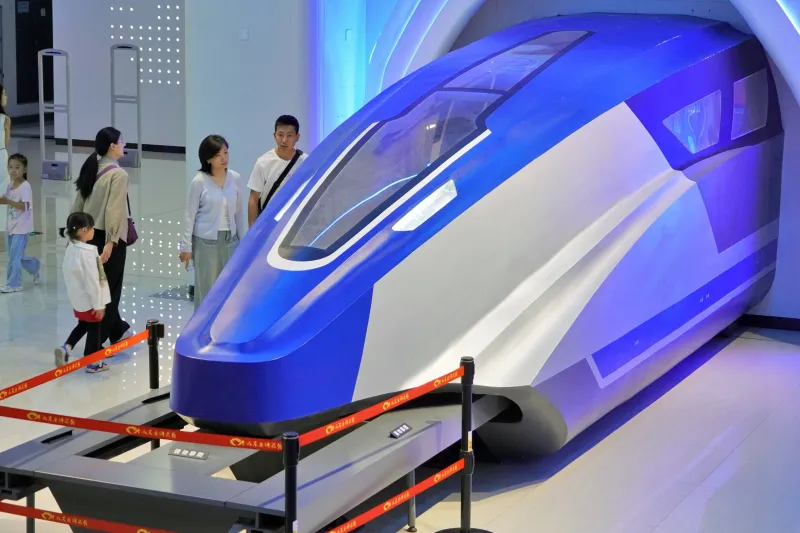
China has been testing Maglev trains for several decades and has now announced a new speed record achieved by a Maglev prototype that reached 650 km/h, according to the Chinese publication CGTN. The Chinese would like to build vehicles that can run at 1,000 km/h, but many technical obstacles remain to be overcome.
Currently, the fastest passenger train in the world reaches 431 km/h but only runs at over 400 km/h for a few minutes, being a Maglev train in Shanghai. These trains have no direct contact with the track, reducing friction and allowing them to reach these breathtaking speeds.
The trains are propelled by powerful magnetic fields, but the implementation costs are very high. The trains “levitate” a few centimeters above the ground. Construction costs reach tens of millions of dollars per kilometer and can even exceed 100 million per kilometer, enormous sums that very few countries would be willing to invest.
The first Maglev prototype to exceed 600 km/h was Japanese, in 2015, and China reached the “milestone” in 2020.
Engineers at the Donghu Laboratory in Hubei province managed to accelerate a 1.1-ton test vehicle to a speed of 650 km/h on a test track only 1 km long, according to CGTN.

This achievement was made possible by this short experimental track, developed entirely within the Hubei laboratory.
Conventional high-speed train tests require 30–40 km tracks, but Maglev requires much less, given its extraordinary acceleration and braking capacity.
However, the test track is being extended and a platform is being built so that the prototype can reach speeds of 800 km/h in 2026. The work should be completed by the end of the year.
In addition to its acceleration performance, the technology also allows complete deceleration to 0 km/h in just 200 meters. Precise control of acceleration and braking makes this track an essential element for the development of high-speed trains and the creation of other advanced transport technologies.
Source: hotnews.com