


Business
Global Fuel Prices Surge Amid Geopolitical Tensions and Supply Disruptions
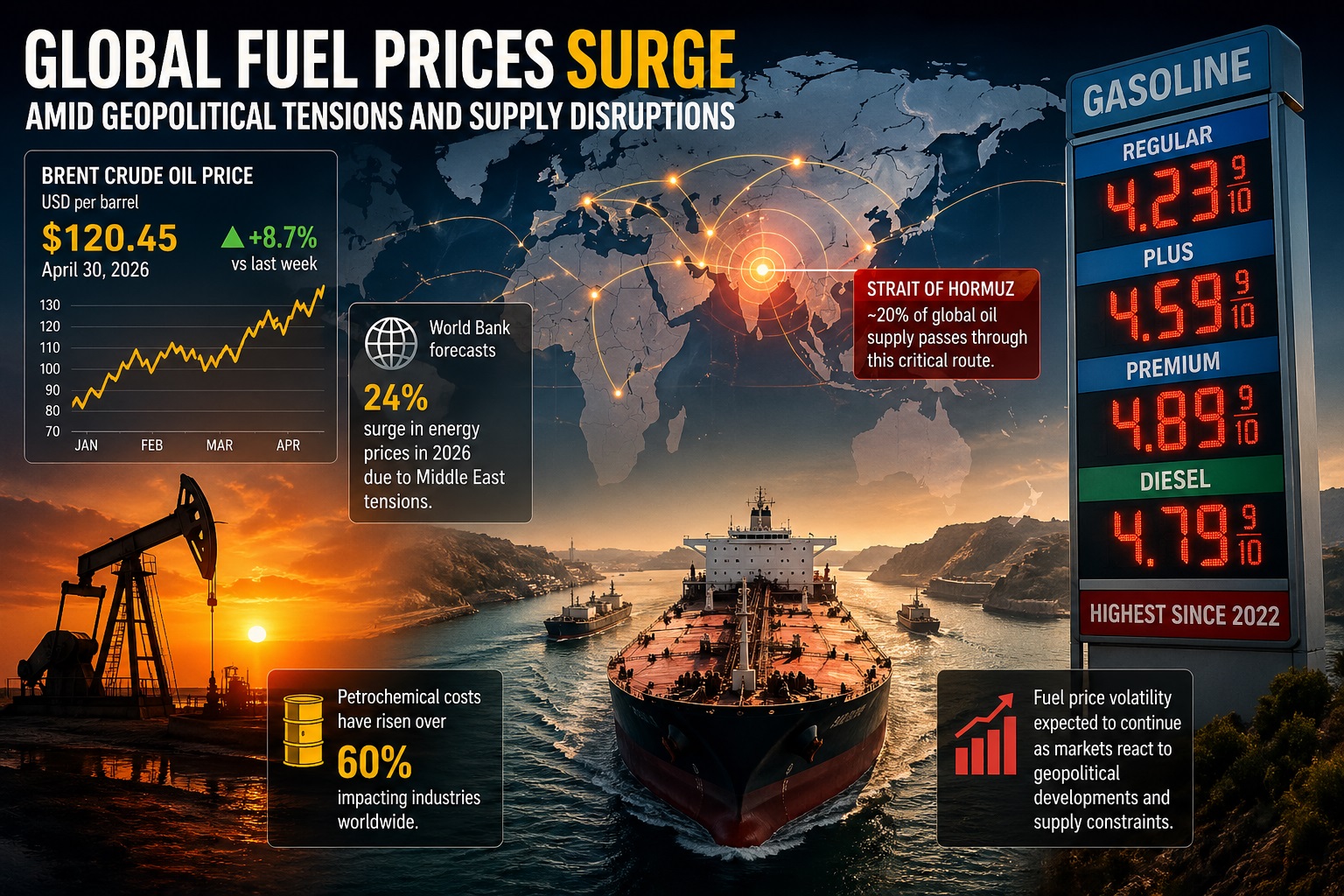
April 30, 2026 — Global fuel prices are experiencing sharp fluctuations, driven primarily by geopolitical instability and supply chain disruptions in key energy regions. Recent developments in the Middle East, particularly tensions involving Iran and the strategic Strait of Hormuz, have significantly impacted oil markets worldwide.
Brent crude oil prices have surged beyond $120 per barrel in recent days, reflecting fears of constrained supply and reduced tanker traffic through one of the world’s most critical oil transit routes. Analysts report that nearly 20% of global oil supply typically passes through this corridor, making it highly sensitive to conflict.
In the United States, gasoline prices have climbed to approximately $4.23 per gallon, the highest level since 2022, with some regions experiencing even sharper increases. The surge has been attributed not only to rising crude prices but also to refinery limitations and increased seasonal demand.
The World Bank warns that global energy prices could rise by as much as 24% throughout 2026 if disruptions persist, potentially fueling inflation and slowing economic growth across developing economies. Meanwhile, petrochemical costs have already increased by over 60%, affecting industries ranging from manufacturing to transportation.

Despite the upward pressure, some countries have maintained stable domestic fuel prices through government intervention and subsidies, highlighting the uneven global impact of the crisis.
Experts caution that fuel price volatility is likely to continue in the coming months, as markets react to geopolitical developments, production levels, and policy responses. The situation underscores the fragility of global energy systems and the importance of diversifying energy sources in an increasingly uncertain world.
