
Business
China’s record $1 trillion-plus trade surplus shows the renminbi should be allowed to appreciate
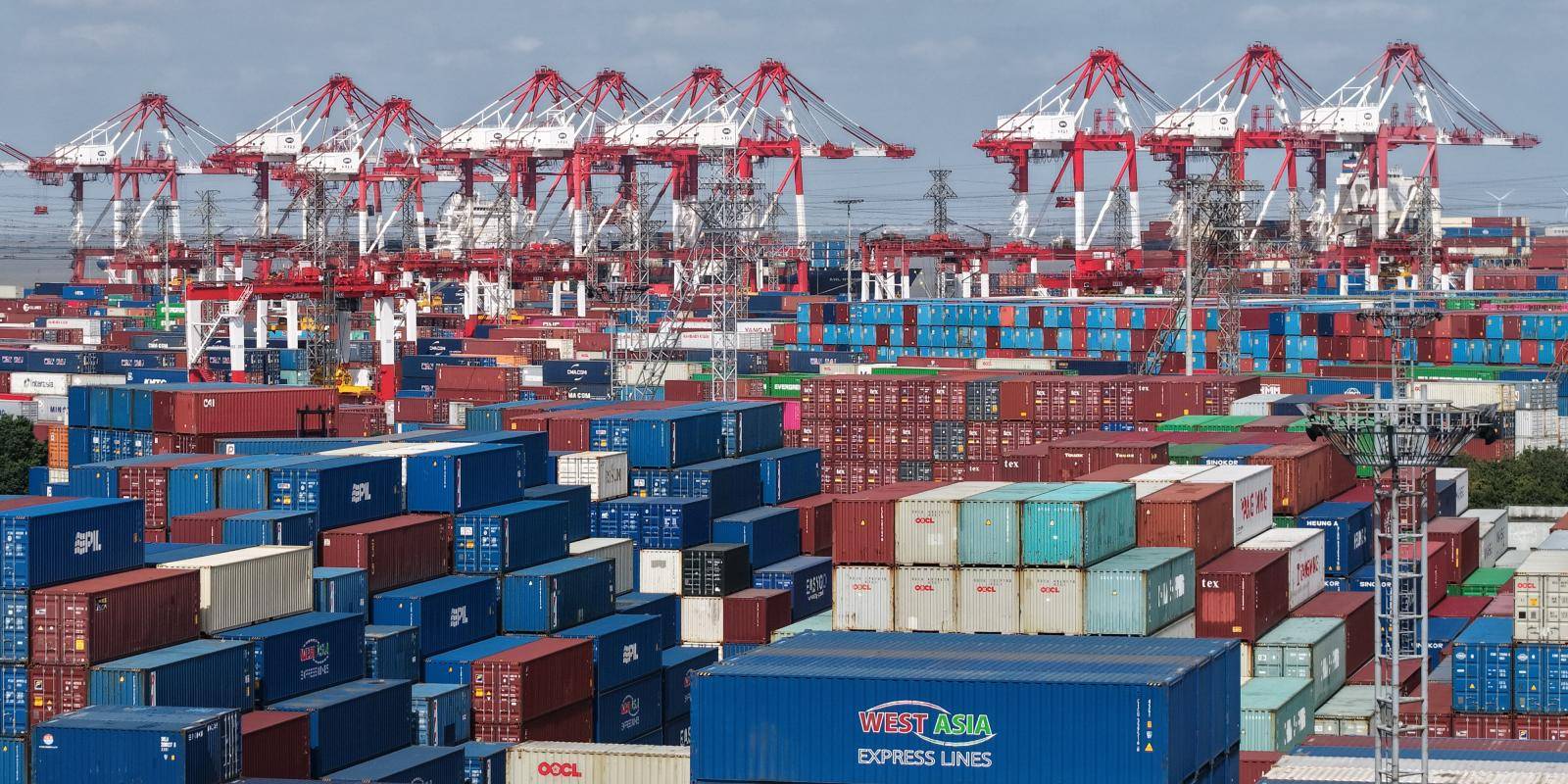
China’s goods trade surplus with the world has surpassed $1trillion this year for the first time. According to official data announced on Monday, China’s merchandise trade surplus rose $111.7 billion in November to notch up a surplus of $1.08 trillion in the first 11 months of the year, up 22.1 per cent from the same period last year.
Estimates for the full-year surplus vary. But Capital Economics, a London-based research firm, forecasts it will rise to a total $1.23 trillion, equivalent to just over one per cent of global GDP.
At that level, China’s full-year trade surplus is set to rank as the largest (as a percentage of global GDP) in recent history and will be roughly on a par with the extraordinary surpluses that the United States recorded during the Second World War. This reveals much about how China’s place in the global economy is changing.
One important shift contributing to the surplus is the sharp increase in high-tech Chinese exports, a trend that is dealing shocks to competitors in the West. A jump in trade with non-US markets, including the EU and Global South countries, has helped Beijing shrug off the impact of US tariffs. Meanwhile, Chinese demand for imports has largely flatlined in recent years, as Chinese brands gain ground on Western counterparts.

The huge trade surplus is remarkable, but likely unsustainable – drawing attention to China’s undervalued renminbi currency.
High-tech exports fuel the surge
The rise in Chinese exports this year has been fed by the growing strength of high-tech exports, which have outperformed the 5.4 per cent increase in general exports seen in the first 11 months.
In particular, auto exports – particularly of electric vehicles – have surged, as Chinese manufacturers grab global market share from Japanese and European competitors. China has overtaken Japan to become the world’s biggest car exporter. It is set to export well over 6 million cars in 2025, with a trajectory to export around 8 million in 2026.
China still lags behind US companies such as Nvidia in advanced semiconductor technology. But it is fast becoming a dominant force in ‘legacy chips’ – less advanced chips typically used in a range of products such as cars, household appliances and medical devices. Semiconductor exports grew 24.7 per cent in the first 11 months.
In shipbuilding too, China’s ascent up the technology ladder has given it dominance in global markets. Exports of ships grew 26.8 per cent in the first 11 months, compared to the same 2024 period.
These gains in global market share are being repeated elsewhere, as Chinese manufacturers offer cutting-edge technologies at a sharp discount to their competitors in the West. China now leads the world in 66 out of 74 technologies tracked by ASPI, an Australian think tank. The US leads in the remaining eight.
Exports to the US fall but those to Europe surge
China’s robust export performance stands in contrast to the pessimism that marked much of early 2025, as the administration of US President Donald Trump signalled and then announced tariffs on Chinese imports.
Current average US tariffs on Chinese goods stand at 47.5 per cent, down from a peak of 145 per cent reached after a retaliatory spiral that followed the ‘Liberation Day’ in April. These tariffs have had a significant negative impact on US-China trade, driving down Chinese exports to the US by 18.9 per cent over the first 11 months, compared to a year ago.
Demand from other economies has been more than sufficient to offset the US slump.
Nevertheless, demand from other economies has been more than sufficient to offset the US slump. Much of this has been seen in the EU, where sales of high-tech products have boosted the year-to-date export growth to 8.1 per cent.
Global South destinations, including Southeast Asian nations and Africa, were again bright spots for Chinese exports. The member nations of the Association for Southeast Asian Nations (ASEAN) comprise China’s biggest trade partner, partly because of indigenous demand for Chinese goods and partly because some ASEAN countries – such as Vietnam and Thailand – are used as ‘connector’ countries through which exports ultimately destined for the US are finished.
Source: Chathamhouse.org