


Culture & Arts
Impossible Places | The Strangest Rock Formations on Earth
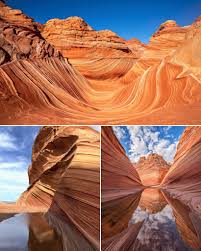
Have you ever looked at a colossal stone formation and wondered whether nature was truly the architect or if something far older left its mark behind? Across the planet, rocks split with impossible precision, boulders balance on edges too narrow to trust, and entire landscapes rise in shapes so deliberate they seem almost engineered. Some were sculpted by wind, water, pressure, and volcanic force over millions of years, while others were carved, stacked, or moved by civilizations whose methods still puzzle modern science. From stones perched above abyss-like cliffs to forests of limestone pillars and monuments cut directly from mountains, these structures blur the boundary between geology and mystery.
These are the world’s strangest rock formations and stone structures, places where the Earth itself feels less like a planet and more like an unsolved design. Kjeragbolten, Norway. Trapped tightly between two vertical cliffs, the giant rock hangs in the air like a breathless joke of nature.
Although it is only about 177 cubic feet, it sits directly above a drop of about 3,228 feet where one wrong step could fall straight into the dark water below. To keep this wild feeling untouched, there are no fences or safety nets, so everyone who steps out must hold their own life in their own hands. Strangely, even though tens of thousands of visitors climb onto it each year to take photos, dance, or do handstands, no one has ever slipped from the rock’s own surface into the abyss.
To get just one moment standing on this lonely stone, many people must wait two to three hours along a narrow cliff edge filled with cold wind. When sunlight passes through the V-shaped crack and cuts across the darkness, the whole rock glows like a launchpad between two gray walls, turning fear into an unforgettable kind of beauty. Fairy chimneys, Cappadocia, Turkey.

From far away, these stone columns look like chimneys rising from the earth, where ancient people believed fairies lived below. This surreal landscape is actually the remains of violent volcanic eruptions from three to ten million years ago. Over time, the soft, tough body was worn away faster by wind and water than the hard basalt cap, leaving stone towers up to about 131 feet tall, standing in a fragile balance.
What makes this place truly unique is that for thousands of years, people carved into the soft rock to create a maze of homes and underground cities. Depending on the minerals, the chimneys change color from ivory-white to orange-pink, making the whole area feel like a living body changing under the sun. The sight of bright hot air balloons floating above the stone forest at sunrise has become one of the most famous travel images of Turkey.
Golden Rock, Myanmar. Rising on the edge of an abyss about 3,609 feet above sea level, Golden Rock shines as if it is challenging the law of gravity. This rock is about 25 feet tall and weighs nearly 674 tons, yet it balances on a tiny contact point, making viewers feel that one light touch could push it down the cliff.
According to legend, the 24-foot pagoda on top of the rock keeps one hair of the Buddha, and this sacred power has held the stone for centuries. Over time, millions of male believers have pressed 24-carat gold leaves onto its surface, turning the gray rock into a glowing mass among mountain clouds, incense smoke, and prayers. Thanks to this pure gold layer, the rock works like a giant reflector, bright at noon, orange-red at sunset, and mysterious in the night mist under pilgrims’ candles.
Sigiriya, Sri Lanka. Rising from the flat tropical jungle like a redstone meteor, this giant fortress is the hardened magma core of an extinct volcano about 656 feet high. At the foot of the ancient rock, water fountains powered by hydraulic pressure still rise during the rainy season, even after being forgotten for 15 centuries.
Halfway up the cliff, two huge lion claws made of brick and stone guard the path, making people below look as small as ants. Reaching the top is a breathless climb, because visitors must cross more than 1,200 steep steps under burning sun and strong cliff winds. But when you reach the flat summit, the full circle view over the land below makes it easy to understand why a king wanted to rule from here.
Behind this royal beauty is a dark past, because the fortress was born from the fear of a king who killed his own father to take the throne. Rock-hewn churches of Lalibela, Ethiopia. Breaking every normal idea of architecture, this underground holy place was not built with bricks and mortar, but carved by removing more than 100,000 tons of solid rock.
Although it sinks about 39 to 49 feet below the ground, the whole complex has stayed dry and strong for 800 years thanks to a smart system of drainage trenches. Its famous cross-shaped church was carved straight down from above, making it look like a powerful spiritual seal stamped into the earth. To explore it, visitors must slowly move through narrow, dark tunnels and deep trenches that feel like mysterious underground world.
Instead of rising proudly into the sky, this wonder digs deep into the ground, showing that true faith can also live in humility. One strange detail is that ancient stone workers carved the huge rock walls to look like wooden beams and mortar from lost empires. Stonehenge, United Kingdom.
Standing tall as an eternal mark amidst the windy plains for over 4,500 years, this legendary stone circle is the greatest and most mysterious stone testament that prehistoric humanity ever left for posterity. Moving beyond primitive stone blocks, this is also the only ancient structure to ingeniously apply the mortise and tenon woodworking technique, helping to lock horizontal beams into upright pillars with such sophistication and durability through thousands of years of change. On the arid chalk plateau, people of the past age patiently used simple red deer antlers to dig five feet into the earth, creating a circular ditch surrounding the proud, pie-shaped gateways pointing toward the high sky.
At every summer solstice, as the sun begins to rise, tens of thousands of hearts stand waiting for the moment the first sunbeam pierces straight through the heart of the stone circle, creating an enchanting spiritual connection between humanity and the vast universe. The raw and lonely beauty of the gray stone blocks amidst the endless green grass weaves a solemn space, making anyone who sets foot here feel as if they are wandering into another haunting dimension. In the silence of that space, the wind whistling through narrow stone gaps suddenly turns into low, moaning sounds, like whispers echoing from the deep past of spirits long vanished.
Moai statues. Easter Island. Chile.
Reaching proudly amidst the desolate ocean, 2,200 miles from the continent, these great stone statues are the heartbreaking embodiment of a civilization that once flourished before fading forever. Behind the majestic appearance of supreme beings, they are actually silent lifebuoys, cleverly placed to mark the rare underground freshwater springs to maintain life on the barren island. Tracing back to the volcano slope, time seems to choke and freeze as hundreds of unfinished statues still lie scattered, exactly as if the stone carvers had suddenly vanished into nothingness overnight.
Contrary to the misconception that gods would look out to the far sea, that giant army simultaneously turned its back on the fierce waves, yearningly gazing deep inland like forgiving guards protecting the villagers. The mystery deepens when the earth fully reveals the great bodies hidden beneath the bare heads, exposing countless exquisite tattoos that the darkness has patiently sealed for centuries. Now, amidst the howling wind, those empty eye sockets still quietly leave a tearful dying wish for humanity.
Once the life source of Mother Nature is completely drained, the proudest civilizations will all be drowned in oblivion. Balanced Rock, United States Challenging every law of physics, Balanced Rock appears like a giant stone trying to keep its balance on a thin neck in the Utah desert. The scene feels even more shocking because the whole structure is about 128 feet tall, while the upper rock alone is about 56 feet high and weighs about 3,600 tons.
The secret of this strange balance lies in the geological contrast between the very hard sandstone block above and the softer mudstone foot below, which erodes more easily. Over millions of years, wind and water have worn away the lower foot faster, making the support smaller and creating a tense bottleneck shape. The whole rock glows orange-red and slowly turns blood-dark red when sunset falls over the lonely plain.
It is seen as a temporary natural sculpture, recording a frozen moment in a process of destruction that has lasted for millions of years. Al-Nazla Rock Formation, Saudi Arabia In the Saudi Arabian desert, a great sandstone block is split in half by a razor-sharp crack so perfect that it looks like the cut of an alien laser. This rock is about 30 feet tall, creating an extreme physical paradox as thousands of tons balance dangerously on two tiny stone feet as if it could collapse at any moment.
In truth, a fault in Earth’s crust tore the rock open from the inside and sandstorms later worked like a grinding machine, polishing the vertical cut over thousands of years. Blurring the line of time, its surface appears like a 4,000-year-old stone mural, preserving sharp carvings of Arabian horses, camels, and people. Its unreal beauty is so powerful that folk legends say this deadly place is called Fidzirkur Iceland.
In the cold ocean of northwestern Iceland, Fidzirkur looks like a giant prehistoric creature bending down to drink water. The name Fidzirkur means white shirt because droppings from thousands of seabirds leave white patches across its dark gray stone surface. This basalt rock is about 49 feet tall and changes shape with each viewing angle, sometimes looking like a rhino, sometimes like a dragon, and sometimes like a monster from myth.
Over thousands of years, Atlantic waves have carved away the rock’s base, opening two large holes that make it look as if it is standing on thin legs. Because those legs keep getting weaker, people had to reinforce them with concrete to stop this wonder from falling into the sea too soon. Among black sand, misty clouds, and the legend of a troll turned to stone by sunrise, Fidzirkur becomes a lonely figure that feels both strange and haunting.
Giant’s Causeway, Northern Ireland Stretching along the coast of Northern Ireland, a giant stone honeycomb appears like a futuristic work of a higher civilization, not a natural creation. This masterpiece contains 40,000 interlocking hexagonal basalt columns rising at uneven heights, with some reaching about 39 feet high and extending about 92 feet down to the ocean floor. In truth, volcanic lava from 60 million years ago suddenly shrank when it met cold seawater cracking into these sharp geometric blocks.
Even so, legend still believes this surreal staircase was arranged by a giant warrior into a great bridge to face his enemy. When violent waves hit the narrow cracks, trapped air is squeezed out and makes a choking whistle like a pipe organ playing inside a storm. Under sunset light, the stone surface changes into bright colors, making the landscape look as if lava is boiling again after sleeping for tens of millions of years.
Sacsayhuaman, Peru Reigning proudly on the windy high mountain peaks, this majestic megalithic complex is a dazzling stone love song and holds the deepest mysteries of the ancient Inca empire. With extraordinary patience, tens of thousands of ancient workers dragged massive stones from a distance of 2 to 22 miles, then fitted them together so delicately that a razor blade zero inches thick could not slip through the gap without needing a single drop of mortar. Stretching endlessly for 1,312 feet, the three sharp zigzag walls tower proudly into the air, carrying the shape of the fangs from the Lord Puma, bravely opening its mouth to swallow the sky.
Not just a solid defensive shield, those great sharp corners also transform into a magical astronomical clock hand, quietly catching the sun’s shadow perfectly imprinted on the ground on the vernal and autumnal equinox days. Hidden deep beneath that majestic beauty is the bloody past of the 16th century, where the bodies of thousands of defending warriors piled up into mountains, dyeing the grey stones red and forever changing the migration habits of the shading vulture flocks. Today, when gently touching the cold, rough surface of the thousand-year-old stones, modern humans suddenly find themselves incredibly small, respectfully bowing before the vitality and great stature of a distant historical journey.
