


Health & Beauty
China’s population falls again as birthrate hits record low
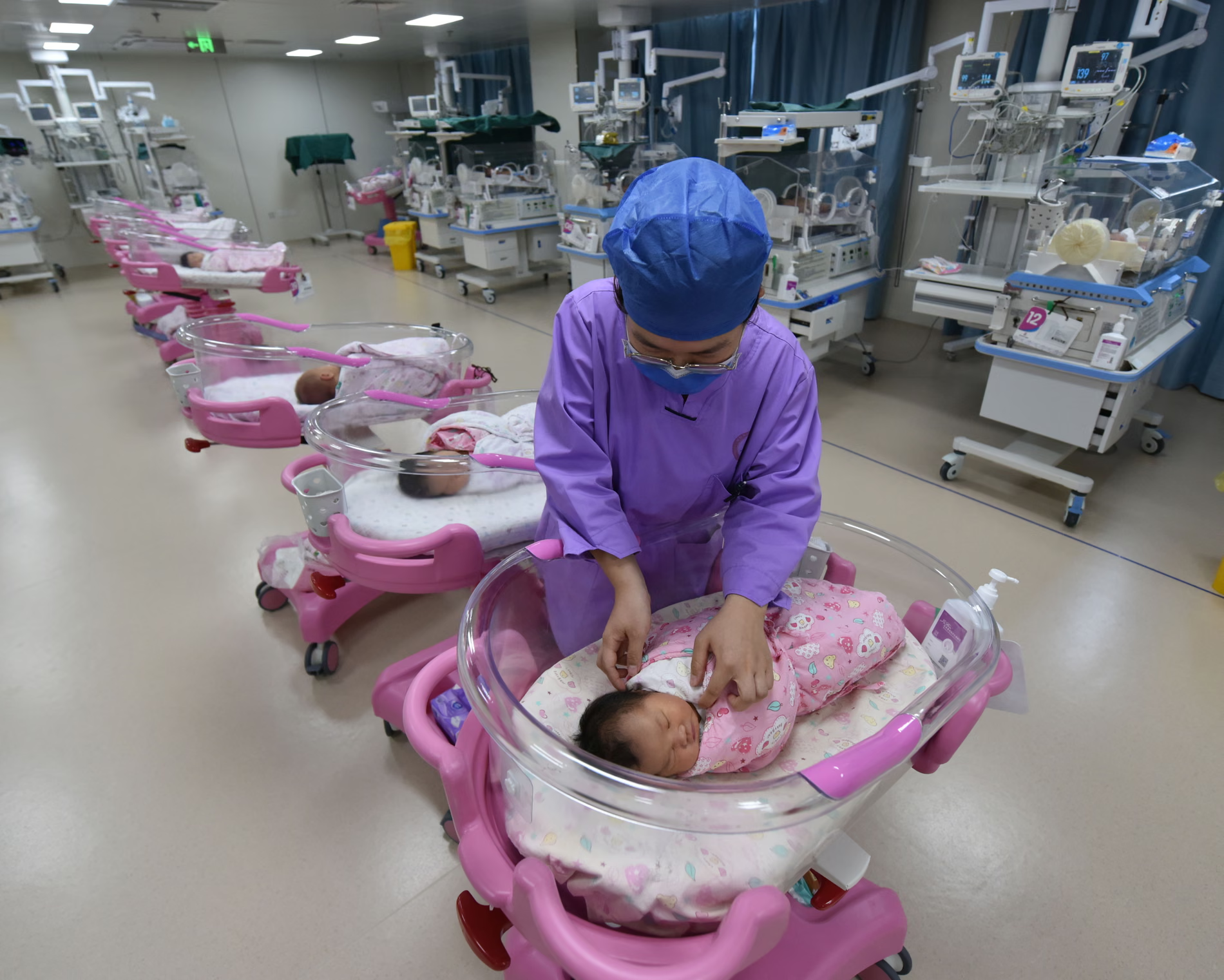
Fourth year of decline deepens concerns over ageing, shrinking workforce and long-term economic impact.
China’s population fell for a fourth consecutive year in 2025 as the birthrate plunged to another record low, according to official data, prompting warnings from experts of further decline.
The population dropped by 3.39 million to 1.405 billion, a faster fall than 2024. Births dropped to 7.92 million in 2025, down 17% from 9.54 million in 2024, while deaths rose to 11.31 million from 10.93 million in 2024, figures from China’s National Bureau of Statistics (NBS) showed. The country’s birthrate fell to 5.63 for every 1,000 people.
Yi Fuxian, a demographer at the University of Wisconsin-Madison, said births in 2025 were “roughly the same level as in 1738, when China’s population was only about 150 million”.

China’s death rate of 8.04 per 1,000 people in 2025 was the highest since 1968. The population has been shrinking since 2022 and is ageing rapidly, complicating Beijing’s plan to boost domestic consumption and rein in debt.
Over-60s account for about 23% of the total population, according to NBS data. By 2035, the number of people older than 60 is predicted to reach 400 million – roughly equal to the populations of the US and Italy combined – meaning hundreds of millions of people are likely to leave the workforce at a time when pension budgets are already stretched.
Marriages in China plunged by a fifth in 2024, the steepest drop on record, with more than 6.1 million couples registering, down from 7.68 million in 2023. Marriages are typically a leading indicator for birthrates in China.
Demographers say a decision in May 2025 to allow couples to marry anywhere in the country, rather than only their place of residence, is likely to lead to a temporary increase to births.
Marriages rose 22.5% year on year to 1.61 million in the third quarter of 2025, putting China on course to halt an almost decade-long annual decline. Full data for 2025 will be released later this year.
Authorities are also trying to promote “positive views on marriage and child-bearing” as they seek to counter the long-term effects of the one-child policy, which was in force from 1980 to 2015 and helped reduce poverty but reshaped Chinese families and society.
Population movement has compounded the demographic challenge, with large numbers of people moving from rural areas to cities, where raising children is more expensive. China’s urbanisation rate was 68% in 2025, up from about 43% in 2005.
Policymakers have made population planning a significant part of the country’s economic strategy. This year, Beijing faces potential costs of about 180bn yuan ($25.8bn/£19.3bn) to increase births, according to Reuters estimates.
Measures include a national child subsidy introduced last year and a commitment that from 2026 women will have “no out-of-pocket expenses” during pregnancy, with all medical costs – including IVF – fully reimbursed under the national medical insurance fund.
Source: TheGuardian
