

Business
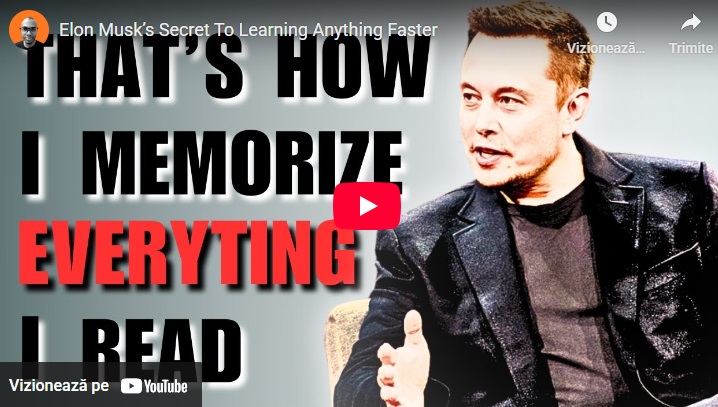
Elon Musk’s Secret To Learning Anything Faster
Elon Musk is a name synonymous with innovation, running companies like SpaceX, Tesla, and Neuralink. But have you ever wondered how he manages to excel in such diverse industries without formal training in most of them? The secret lies in his revolutionary learning techniques. In this article, we dive into how Elon Musk taught himself rocket science, built a multi-billion-dollar empire, and became one of the most versatile minds of our time-all without relying heavily on traditional education.
Elon Musk, the man behind Tesla, SpaceX, and Neuralink. He’s not just running multiple billion-dollar companies, he’s redefining industries. Yet here’s the thing, he’s not a trained rocket scientist, AI expert, or neuroscientist.

So how does he do it? How does he master topics that leave most people scratching their heads? It’s not about degrees. Musk has said he doesn’t credit his college education for his success. Instead, he developed a method, a way of learning anything deeply and quickly.
And it’s so effective that it took him from a kid reading Encyclopedia Britannica to designing rockets that are now making space travel more affordable. Today, we’ll break down how Musk learns, how he applies knowledge to solve the world’s toughest problems, and how you can adopt these techniques to achieve extraordinary results in your own life. Chapter one, why Musk doesn’t trust traditional education.
You don’t need college to learn stuff, okay? Musk attended the University of Pennsylvania, earning degrees in economics and physics. He even enrolled in Stanford’s PhD program, but dropped out after just two days. Why? Because Musk doesn’t believe the traditional education system fosters rapid or deep learning.
In his words, it’s about memorizing rather than understanding. Musk feels that schools don’t focus enough on critical thinking or problem solving. The skills that matter most in the real world.
So he decided to take learning into his own hands. So how would you educate your five boys? Actually, I created a little school. When Musk wanted to build rockets for SpaceX, he didn’t hire a tutor or enroll in classes.
Instead, he reached out to Jim Cantrell, a satellite systems expert. Musk cold called Cantrell, convinced him to meet, and borrowed textbooks like rocket propulsion elements and fundamentals of astrodynamics. Musk didn’t skim them.
He devoured them. Cantrell later said Musk seemed to memorize everything he read. He could hold conversations about astrodynamics and rocket science like he’d been doing it for years, Cantrell recalled.
How did you get the expertise to be the chief technology officer of a rocket ship company? Well, I do have a physics background that’s helpful as a foundation. And then I read a lot of books and talk to a lot of smart people. You’re self-taught? Yeah.
But here’s the twist. Musk didn’t just read to absorb information. He read to apply it.
Soon after, he used that knowledge to design the Falcon 1, SpaceX’s first rocket. Chapter two, the semantic tree method. So what makes Musk’s learning so effective? He uses a method he calls the semantic tree.
Here’s how it works. Musk starts by mastering the core principles of a topic, the trunk and branches of the tree, before diving into the finer details, which he calls the leaves. For example, when Musk studied rocket science, he didn’t jump straight into complex designs.
He started with physics, how objects move, the science of combustion, and materials engineering. Once he understood the fundamentals, he built on them. Musk believes most people fail to learn deeply because they focus on the leaves first, memorizing random details without grasping the structure.
His method ensures that every new piece of information has a place to fit, making it easier to recall and apply. And Musk doesn’t just use this approach for engineering. It’s how he thinks across disciplines, from AI to renewable energy.
By connecting core principles, he comes up with ideas others miss. Chapter three, raised by books. Musk’s learning journey started young.
Growing up in South Africa, he devoured books for 10 hours a day. By nine, he’d read the entire Encyclopedia Britannica. His brother Kimball says Musk would finish two books a day, reading anything he could get his hands on, from science fiction to biographies.
This habit of reading broadly is key to Musk’s success. He doesn’t limit himself to one field. Instead, he draws connections between seemingly unrelated topics.
For example, his knowledge of physics helps him understand AI. His background in economics gives him insight into scaling Tesla. Musk recommends books that shaped his thinking, like Walter Isaacson’s biographies of Benjamin Franklin and Albert Einstein.
These aren’t just stories. They’re lessons in leadership, innovation, and problem solving. Musk applies those lessons to his companies, driving breakthroughs in multiple industries.
Chapter four, applying knowledge. Reading is just the first step. What sets Musk apart is how he applies what he learns.
He said, knowledge is only useful if you put it into action. When Musk read about rocket propulsion, he didn’t just memorize equations. He used that knowledge to create SpaceX’s initial designs.
And when he studied AI, he applied those insights to Neuralink and Tesla’s self-driving technology. This principle extends to how Musk solves problems. He once said, when you struggle with a problem, that’s when you truly understand it.
That’s why he pushes his team to dig deep, and it’s how he evaluates potential hires. Musk famously asked job candidates to explain problems they’ve solved. If they can break down their process in detail, he knows they’re genuine.
If not, it’s clear they didn’t do the work. Chapter five, lessons from Musk’s learning philosophy. What can we learn from Musk’s approach? Here are three takeaways.
One, start with the basics. Don’t get lost in the details. Master the core principles first.
Two, read broadly. Explore topics outside your field. Cross-disciplinary knowledge leads to innovation.
Three, apply what you learn. Don’t just absorb information, use it. Whether it’s solving problems at work or pursuing a passion project, action is where the magic happens.
Musk’s success isn’t just about intelligence, it’s about curiosity, persistence, and strategy. He’s proof that you don’t need formal education to achieve extraordinary things. You just need the right mindset.
You don’t need college to learn stuff, okay? Everything is available, basically, for free. You can learn anything you want for free. It is not a question of learning.
There is a value that colleges have, which is like, you know, seeing whether somebody’s, can somebody work hard at something, including a bunch of sort of annoying homework assignments, and still do their homework assignments, and kind of soldier through and get it done. You know, that’s like the main value of college. And then also, you know, if you probably want to hang around with a bunch of people your own age for a while, instead of going right into the workforce.
So I think colleges are basically for fun, and to prove you can do your chores, but they’re not for learning. So I’m going to make sure Tesla recruiting does not have anything that says requires university, because that’s absurd. But there is a requirement of evidence of exceptional ability.
Like you just can’t, if you’re trying to do something exceptional, you must have evidence of exceptional ability. I don’t consider going to college evidence of exceptional ability. In fact, ideally, you dropped out and did something.
I mean, obviously, you know, look at like, you know, Gates is a pretty smart guy who dropped out. Jobs pretty smart, he dropped out. You know, Larry Ellison, smart guy, he dropped out, like, obviously not needed.
So did Shakespeare even go to college? Probably not. Elon Musk’s journey from a bookish kid to a self-taught rocket designer is a testament to the power of learning. If he can teach himself rocket science, imagine what you could accomplish by adopting his methods.
So what’s the first topic you’ll tackle? Let me know in the comments below. And if this video inspired you, don’t forget to like, subscribe and hit the notification bell. Thanks for watching, and I’ll see you in the next one.
