


World News
Climate Change Intensifies Global Weather Extremes as Key Drivers Accelerate
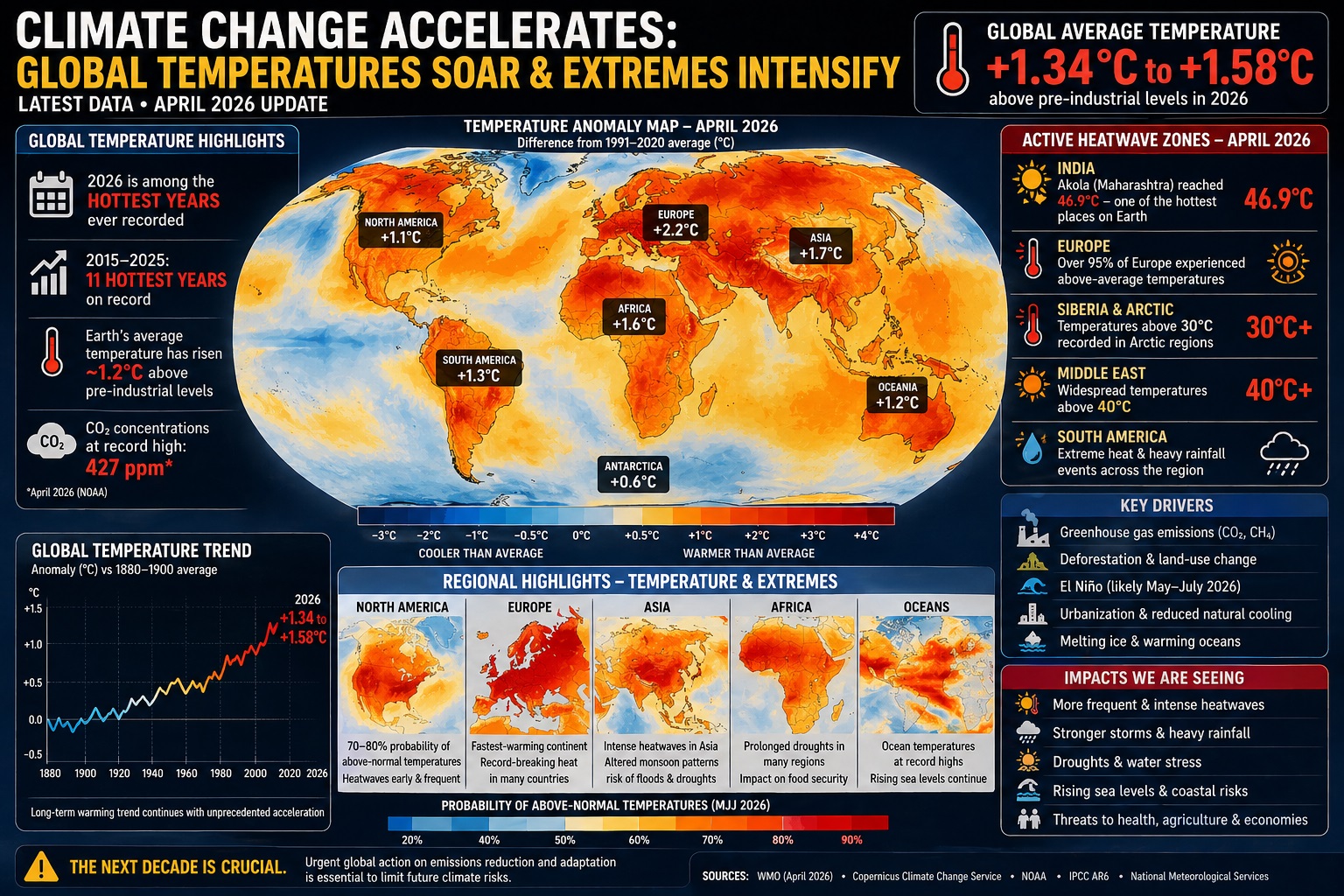
April 30, 2026 — The pace of climate change continues to accelerate, with new data showing a marked increase in extreme weather events across multiple continents. Scientists warn that rising global temperatures, driven primarily by human activity, are intensifying storms, prolonging droughts, and disrupting seasonal weather patterns worldwide.
According to recent assessments by the Intergovernmental Panel on Climate Change, the Earth’s average surface temperature has already risen by approximately 1.2°C above pre-industrial levels. This increase, though seemingly small, has had profound effects on the global climate system, amplifying both the frequency and severity of extreme weather.
One of the primary factors behind these changes is the continued rise in greenhouse gas emissions, particularly carbon dioxide (CO₂) and methane (CH₄). Major contributors include fossil fuel combustion, deforestation, and industrial processes. Organizations such as the World Meteorological Organization report that atmospheric concentrations of these gases have reached record highs in 2025–2026.
Recent months have seen a surge in climate-related events:

- Intense heatwaves across parts of Europe and Asia, breaking historical temperature records
- Severe flooding in regions of South America due to unusually heavy rainfall
- Prolonged drought conditions affecting agriculture in Africa
- Stronger and more frequent tropical storms impacting coastal communities globally
In addition to emissions, natural climate variability also plays a role. Phenomena such as El Niño and La Niña continue to influence short-term weather patterns, often amplifying the effects of long-term warming trends.
Experts emphasize that urbanization and land-use changes are further exacerbating climate risks. The expansion of cities reduces natural cooling areas, while deforestation limits the planet’s ability to absorb carbon dioxide. Meanwhile, melting polar ice and warming oceans contribute to rising sea levels, threatening coastal populations.
Despite these challenges, global efforts to mitigate climate change are ongoing. International agreements such as the Paris Agreement aim to limit global warming to well below 2°C, though current trajectories suggest that stronger and more immediate action is required.
Scientists stress that the coming decade will be critical. Without significant reductions in emissions and large-scale adaptation strategies, the impacts of climate change are expected to intensify, reshaping ecosystems, economies, and daily life around the world.
Recent forecasts indicate that 2026 is among the hottest years ever recorded, with global average temperatures estimated between +1.34°C and +1.58°C above pre-industrial levels.
- The first months of 2026 already rank among the warmest on record, continuing a long-term warming trend.
- The period 2015–2025 represents the 11 hottest years ever measured, highlighting a persistent acceleration of warming.
- In parts of India, temperatures have reached 46.9°C (Akola), placing several cities among the hottest in the world. Multiple regions recorded 44–45°C sustained heat, with night temperatures staying near 30°C, increasing health risks. Cities like Nashik reported 41.5°C, nearly 4°C above seasonal averages, showing rapid short-term fluctuations.
- Europe & Northern Regions
- Over 95% of Europe experienced above-average temperatures recently.
- Even Arctic regions recorded temperatures above 30°C, an extreme anomaly for those latitudes.
- Europe is now considered the fastest-warming continent globally, with accelerated temperature rise trends.
