Celebrity & Gossip
‘Our fantasy of love has to do with need and dependency’: Melissa Febos on her year of celibacy
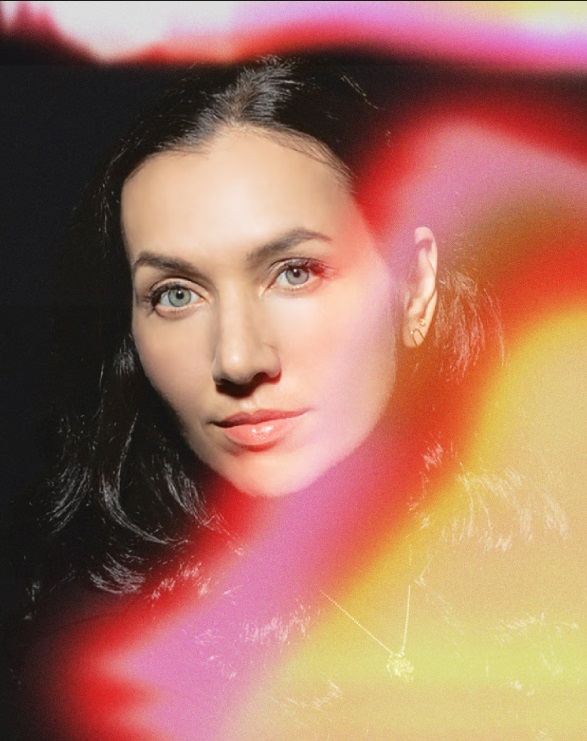
When Melissa Febos decided to be celibate for a year – after what she describes as a “ravaging vortex of a relationship” and “five other brief entanglements” – she felt “pretty self-conscious and kind of weird”. But other people’s reactions surprised her.
“I thought people were going to laugh at me or be like, that sounds boring, but so many people would lean in and either get this eager look on their face or this sort of dreadful look on their face, and they would say, ‘Oh, I think I should probably do that too,’” she says. “I had no idea how many people had been in relationships for their whole adult life.”
Febos, a professor at the University of Iowa and author of books about working as a dominatrix, young womanhood and writing, chronicles this celibate era in her new memoir, The Dry Season. “I had scrutinized my experience and self in many different areas, but in this area, I was fairly unexamined,” she says. “I didn’t have as much insight about that part of myself.”

The experience ended up affecting more than her reliance on love and sex. “All the other areas of my life began to flourish and feel really fulfilling and complete,” she says. “I had kind of a honeymoon experience with myself, especially at the beginning, because I realized almost immediately that I enjoyed my own company profoundly, perhaps even more than I enjoyed the company of any other person.”
What were those first weeks of celibacy like? What was the hardest part?
At first, I wasn’t quite sure what my goal was, or what the conditions of my celibacy would be. I began with sex, because that seemed like the most obvious common denominator in my relationships. So I thought, I’ll take three months off. Within the first few weeks, I had the experience of flirting with someone, and I got a text from someone I’d been on a date with, and I identified very quickly the feeling of excitement and distraction that had been propelling me.
I almost immediately began questioning the parameters of my celibacy: I thought, oh, perhaps it’s not sex. Perhaps it’s this feeling of being taken out of myself and chasing a psychological high that I get out of not just sex, but all of the activity around romance, flirtation and seduction.
What made sex and relationships so appealing for you?
One factor is a collective derangement that we have around love and sex. We idealize this very temporary, superficial definition of love, which has to do mostly with the early stages of infatuation and is predicated upon not yet knowing the lover, and not yet being secure or safe. That’s a traditional sense of eros, of longing and uncertainty; it’s a very immature definition of love, and it’s not sustainable.
We have a collectively problematic relationship to love and sex … that it’s going to complete us
But it is the part of love that pop songs and movies and romance novels are obsessed with. I think we have a collectively problematic relationship to love and sex, and also a narrative about it – that it’s going to complete us, and it’s just about finding the right person and then everything’s going to fall into place.
In addition, I developed early, physically, and underwent a radical difference in the way I experienced being perceived by other people, particularly by boys or men. And I got this messaging, as lots of young girls do, that my primary power in life was to attract and appear lovable and desirable. That’s a very fraught place to be sourcing one’s self-esteem, and I identified it early, at a time in life when I felt really disempowered.
I’ve learned, partly as a result of being celibate and talking about it, that this is really common.
In the book, you talk about distilling these internal beliefs to an idea of “if I’m not wanted, I will die”. You describe this concept as dramatic, but women constantly receive messages – from companies trying to sell us stuff, pop culture – that partnership is what women should aspire to the most.
Those ideas have roots that go back literal centuries, right? Women’s individual personal safety and survival did depend on our being appealing to potential partners, both physically and financially. And that was true for a lot longer than it hasn’t been literally true. I don’t know how we would eschew that idea within just the last few generations.
Why did you include historical examples of women who were also celibate, like the Belgian beguines, the 12th-century abbess Hildegard von Bingen and Shulamith Firestone, who called herself a political celibate?
A few weeks into celibacy, I started to realize I had a set of role models for love and romance that were quite outdated, whom I had adopted as a younger person who was interested in semiconsciously justifying my own choices in love. These were primarily women who were artistically prolific and fulfilled, but also very passionate and messy in their love lives, like Edna St Vincent Millay and Colette and Sappho. I realized, I’ve chosen these role models because I’m already like them. And now that I’m trying to change my ideals, I need new role models.
So I went about reading about women who were voluntarily celibate across global history, and ended up becoming obsessed with these women who seemed incredibly complete and fulfilled, and lived profoundly creative and spiritually centered lives that were also very political, very community-oriented, that were interested in mutual aid and art making and collectivity.
About a month into celibacy, you found you had a lot of time for other things. You included a short list in the book that I thought was really funny: you cut your hair, donated a bunch of clothes and ran 45 miles.
All the adults I know are always complaining about not having enough time, and I, too, have been like that for most of my adult life. This amazing space opened up as soon as I stopped engaging in activities related to love and sex. Some were kind of superficial, like, I revamped my whole apartment. But also, I had this luxury of time to bring a new focus to my creative practice, to all of my other relationships, my friendships, my family relationships, my job.
I had so vastly underestimated the amount of time and energy that I spent devoted to love and sex and flirting or being on apps or spending time with a partner or thinking about a partner or a potential partner. There’s no way that I could have measured that while I was engaged with those things. I just hadn’t realized that I had been preoccupied by partners and dating and love and sex, almost all of the time.
Ultimately you were celibate for a year, but originally had set a goal of three months. Why did you decide to extend that period?
I started with three months because that is a familiar unit of measurement. I’m a sober addict, and three months is a typical amount of time to detox, psychologically. I also knew it would be unrealistic for me to try to commit to anything longer. And honestly, even though it might sound ridiculous to other people, three months was kind of a long time for me to abstain.
But when I got to the end, there was no question that I had barely begun. I was just starting to get a sense of the deeply entrenched patterns that I had been stuck in for years, and I knew that it would take much longer to undo them. I had gotten a break, but I had not fundamentally or constitutionally changed.
In the book, a friend makes fun of you – like, three months is actually not that long.
Yeah, there were a number of people who said that. It’s relative, right? To someone who has trouble getting into relationships, it’s absurd, but I had been incapable of doing that.