Politics
Trump’s Gulf Allies Do Not Want Him to Bomb Iran
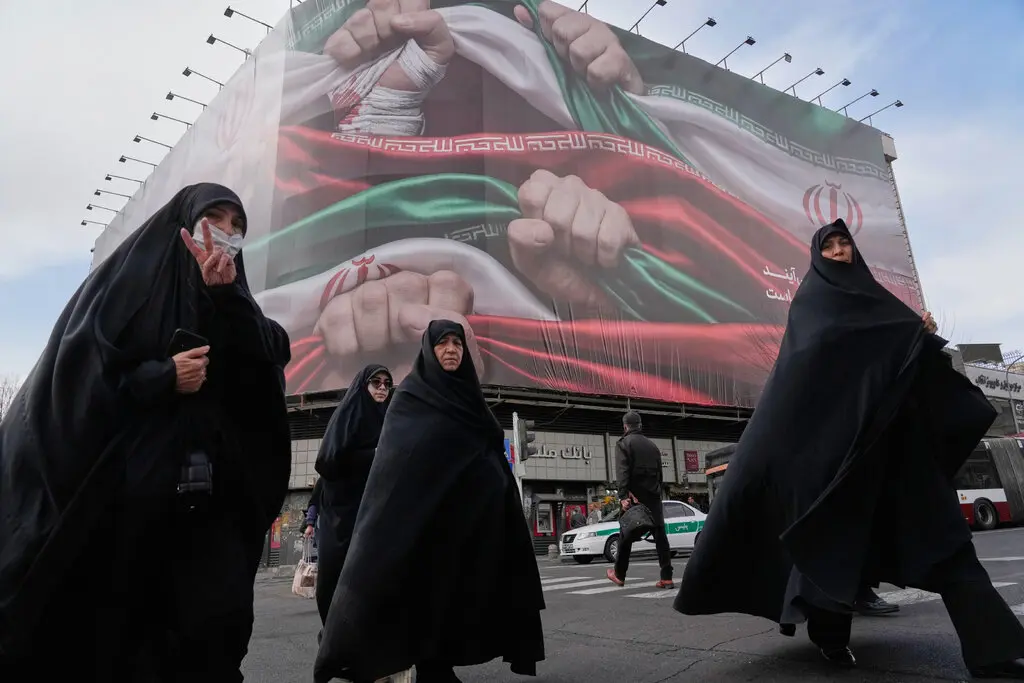
While several of the Gulf Arab countries harbor little love for Iran, they worry that the consequences of rising tensions could blow back on them.
President Trump’s powerful Gulf Arab allies fear the repercussions of a potential American strike on Iran, and some of them are publicly and privately lobbying his administration to choose diplomacy instead.
As protests convulse Iran and the government wages a violent crackdown on demonstrators, Mr. Trump is exploring whether to attack the country, in what he has described as an effort to deter its leaders from killing more of its own people. He has also weighed diplomatic options. On Wednesday, Mr. Trump said he had been “told that killing in Iran is stopping, has stopped.”
Even Gulf governments that have engaged in indirect conflict with Iran — such as Iran’s regional rival, Saudi Arabia — do not support American military action there, according to analysts who study the region.

That is partly because the monarchies of the Gulf worry that the ripple effects of escalating U.S.-Iran tensions, or possible state failure in Iran, would harm their own security, undermining their reputation as regional safe havens for business and tourism.
But it is also because some Gulf governments have come to see Israel, Iran’s archenemy, as a belligerent state seeking to dominate the Middle East. They believe that Israel could pose a greater threat to regional stability than an already weakened Iran does.
“Bombing Iran goes against the calculus and interests of the Arab Gulf States,” said Bader al-Saif, an assistant history professor at Kuwait University. “Neutralizing the current regime, whether through regime change or internal leadership reconfiguration, can potentially translate into the unparalleled hegemony of Israel, which won’t serve the Gulf States.”
The Sultanate of Oman, which often serves as a mediator between Iran and the United States, has advised the Trump administration against striking Iran, a person briefed on the talks said. They spoke on condition of anonymity to avoid disrupting delicate diplomacy.
Qatar is also among the countries attempting to defuse the situation peacefully, the spokesman for Qatar’s foreign ministry, Majed al-Ansari, told reporters on Tuesday.
“The big challenges in the region — and we are talking about internal and external challenges in different countries — require all of us to return to the negotiating table,” Mr. al-Ansari said.
An American military base in Qatar was struck by Iran in a retaliatory attack against the United States last year after U.S. forces bombed Iran’s nuclear facilities — the most recent example of the blowback that Gulf countries fear.
As a precautionary measure, the U.S. military has ordered an unspecified number of nonessential personnel to start evacuating from that base in Qatar, according to two U.S. military officials who spoke on condition of anonymity to discuss operational matters.
Several Gulf countries expressed dismay over the American attack on Iranian nuclear facilities last year, while stopping short of condemning the United States, their main ally.
Yasmine Farouk, the Gulf and Arabian Peninsula project director at the International Crisis Group, said that Gulf countries are worried about “the chaos that a regime change in Iran would cause in the region” and how Israel might use “that vacuum.”
Source: NYTimes