Culture & Arts
Cyborgs, snapchat dysmorphia and AI-led surgery: has our digital age ruined beauty?
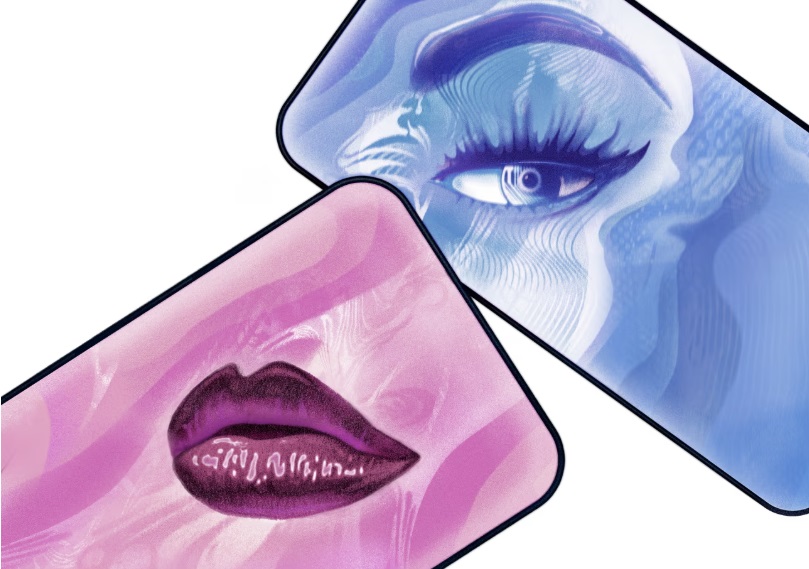
It’s the artist Qualeasha Wood who tells me about Snapchat dysmorphia, “a term coined by plastic surgeons who noticed there was a shift in the mid 2010s when people started bringing in their AI-beautified portraits instead of a celebrity picture”. To resolve your Snapchat dysmorphia, you get your real face remodelled to look like the ideal version of you that artificial intelligence has perfected on your phone screen.
There is a fundamental problem with this, says Adam Lowe, whose Factum Foundation in Madrid is at the forefront of art and technology, digitally documenting artworks and cultural heritage sites around the world. When you have surgery to look like your best self as shown on a flat screen, the results in three-dimensional reality can be very odd indeed. You can feel Lowe’s sadness at the way plastic surgery botches human restoration in pursuit of screen perfection: “I have to look away,” he says.
Such are the paradoxes of the digital age explored in Virtual Beauty, an exhibition opening at London’s Somerset House on 23 July. The exhibition brings together more than 20 international artists to examine how artificial intelligence, social media and virtual identities reshape our understanding of beauty and self-representation in the digital age. It feels particularly resonant as the choice for Somerset House’s 25th anniversary of its public opening – the institution has borne witness to the complete transformation of how we present ourselves to the world. Wood herself stars – her artworks drag you into the heart of online life, juxtaposing her selfies with a ceaseless churning of texts, emails and layers of onscreen windows in montages that capture the restlessness of digital existence. But there’s a twist. Her snapshots of what it’s like to be a queer Black woman in the social media age are rendered as tapestries. In this older, more substantial medium, the grey frames of computer windows and harsh lettering of abusive messages become almost contemplative. And there is a hidden history here. Digitally controlled weaving is more than 200 years old: the Jacquard loom, invented in the Industrial Revolution, was programmed with punch cards telling what pattern to produce.

“I was born in 1996 so the internet was already there,” says Wood. “My whole life has been mediated through that. I got my first computer at the age of five. At six I was online and playing games. The first game I ever played was The Sims, and it’s a life simulator. The first person I ever knew to die was my Sim, not a true human being.”
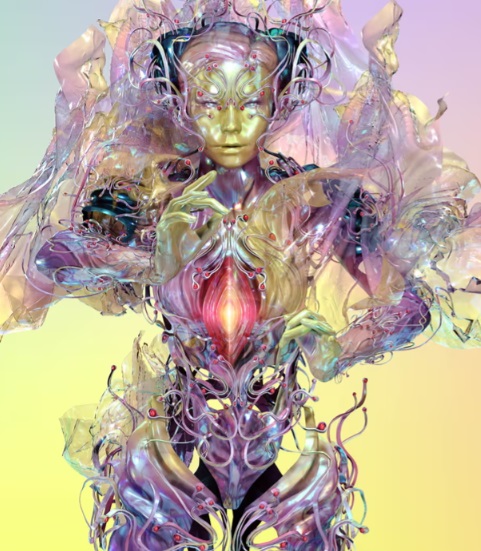
Kardashian’s 2015 book Selfish is a seminal moment in the rise of social media portraiture, not least for providing the template for “Instagram face”, the plumped up, feline aesthetic (the look was famously described as resembling a “sexy baby tiger”) that has come to dominate contemporary beauty standards. The more we shape and propagate our own images online, the more we feel compelled to copy that screen image in the flesh. Wood sees virtual beauty as “an era: it’s a marking of time, like BC and AD. There’s the beauty before technology and filters, and the beauty after. So much of beauty now isn’t about how you see yourself: we look instead at likes and metrics, and how much attention we are receiving or someone else is receiving.”
Wood’s art shows how specific the glare of internet visibility is for her. One of her tapestries includes a string of aggressive online messages and her replies – “Qualeasha were you born to Crack head parents?” “Nope both military veterans!!” Among these brickbats, her physical image is by turns peaceful, melancholy, provocative. True beauty, she insists, does not lie in transforming yourself into an AI product.
“I refuse to contribute to the beauty standard. Those works where I think I’m the least put together are the ones people are most drawn to and find the most beautiful.” Yet she admits she is not immune to the beauty ideals proliferating all around her. As an artist who shares her own life, she wonders how her image will change with time. “What will it be like when I’m 60 and have an older and less perfect body? Even now, I’m of that age when women start getting worked on.”
Source: theguardian.com