Culture & Arts
Meet the female architect making history at the Metropolitan Museum of Art
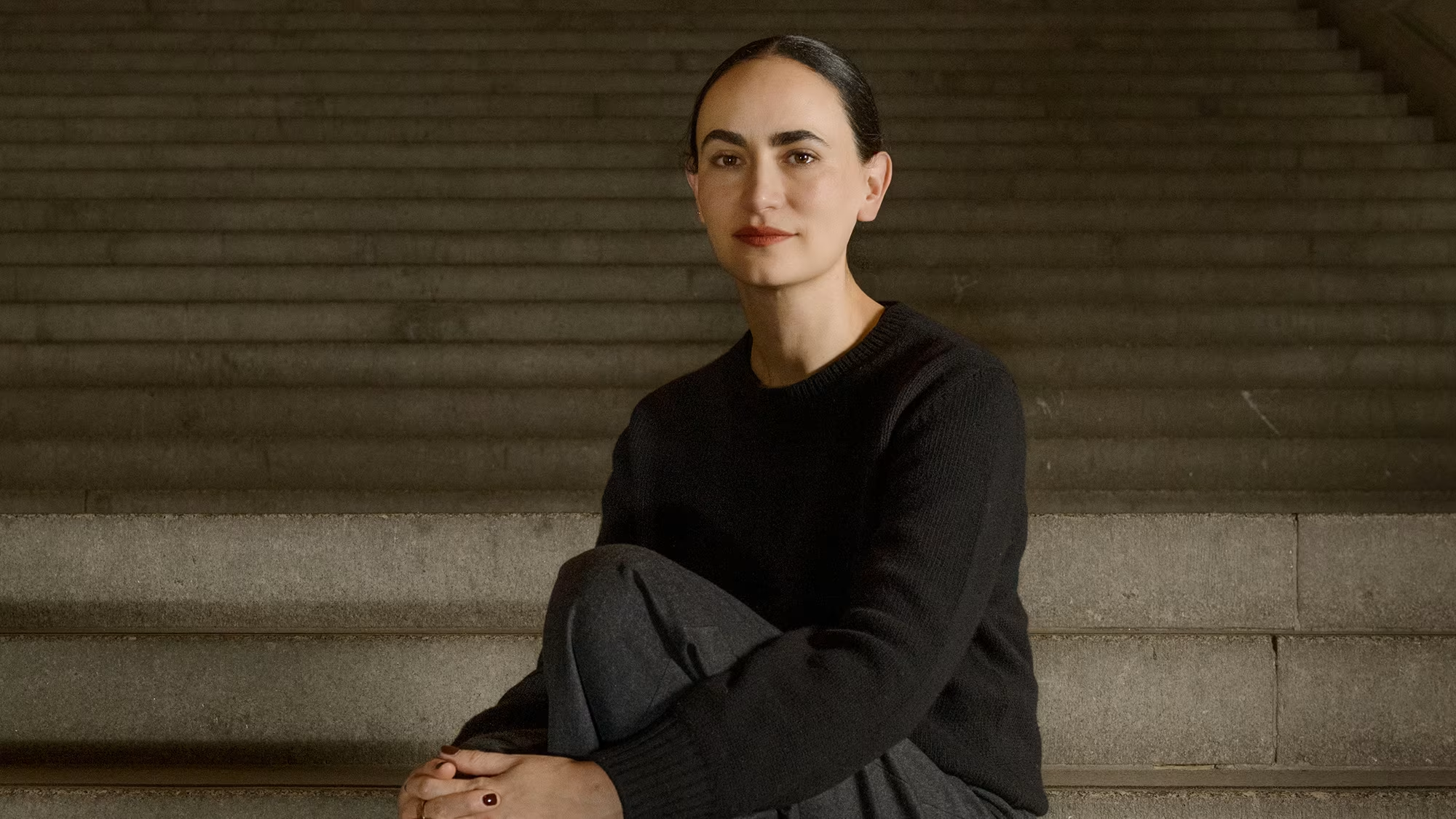
Over the next five years, New York City will welcome two new momentous spaces for the arts, both along Manhattan’s iconic Fifth Avenue, some 40 blocks apart. The first is an airy new $550-million wing for the Metropolitan Museum of Art’s modern and contemporary collection on the Upper East Side; the second is a new home for the groundbreaking National Black Theatre (NBT) in Harlem.
Both of these undertakings are led by the same architect, who, until now, had never completed a building for a cultural institution of this scale — nor had she even designed a major project in New York.
Frida Escobedo’s tandem commissions reflect the barrier-breaking superlatives she is now accruing. In a profession that often skews older and male, the 45-year-old Mexico City-born architect’s achievements have often been prefixed by “the youngest,” “the first” or a combination of the two. Her project with the Met, for instance, makes her the first female architect to design a wing in the storied museum’s 155-year history.
Escobedo has always forged her own path. Eschewing tradition, she opened her own eponymous studio in 2006 without having worked her way up through larger architectural firms or under the guidance of a celebrated “starchitect.” Her early projects included a juried commission for Mexico City’s Museo Experimental El Eco, where a series of movable concrete blocks in the museum’s courtyard can be built up or rearranged depending on the program, and the Plaza Cívica, a tilted round stage in the center of a busy plaza in Lisbon, for the Portuguese capital’s architectural triennial, that invited public interaction.

Escobedo’s breakout moment arrived in 2018, when she was selected to design that year’s Serpentine Pavilion, one of architecture’s most prestigious commissions, in London. There she constructed a dark, porous structure of stacked “celosia” walls, typical of Mexican buildings, that cast deep shadows with the rising and setting sun.
The architect’s practice is, she said, “changing constantly” as she works across scales and mediums — a series of Aesop retail stores, temporary sculptural museum installations or tranquil hospitality projects around Mexico. For Escobedo, architecture is a language through which she understands the world. With each new project, she refines her sense of minimalism with an elegant touch, often playing with form and materials that foster a sense of openness, tranquility and mutability.
“What I’ve learned is that I want to become very good at doing things for the first time. It’s about staying curious and engaged and not seeing it as something that you have complete knowledge of,” Escobedo said in a video call. “Even if you’re repeating a certain typology, see it with fresh eyes.”
Building for the future
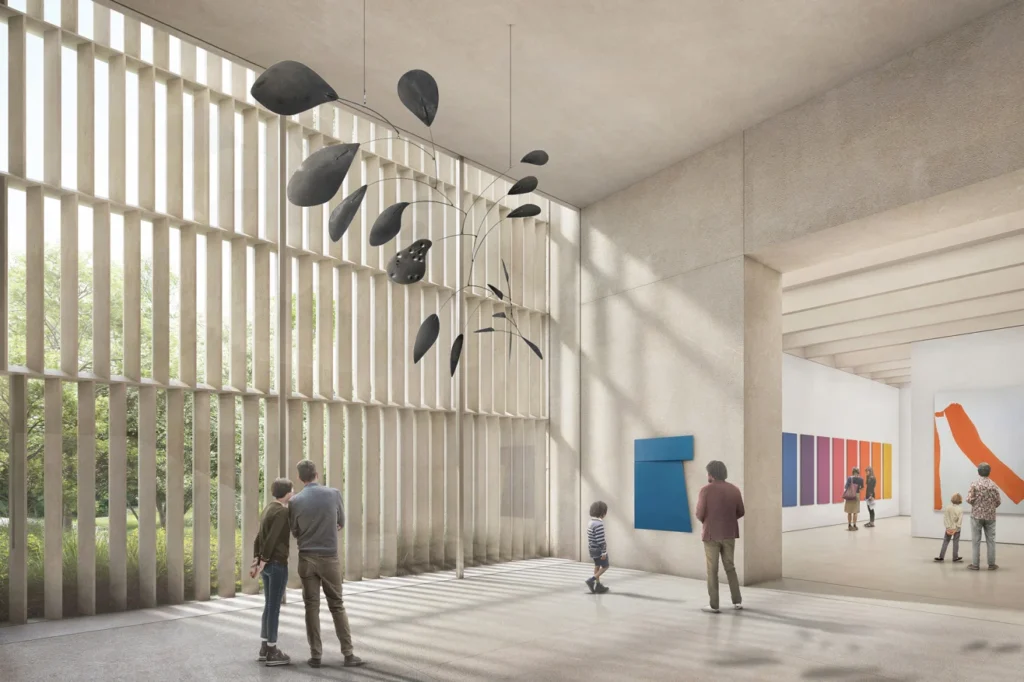
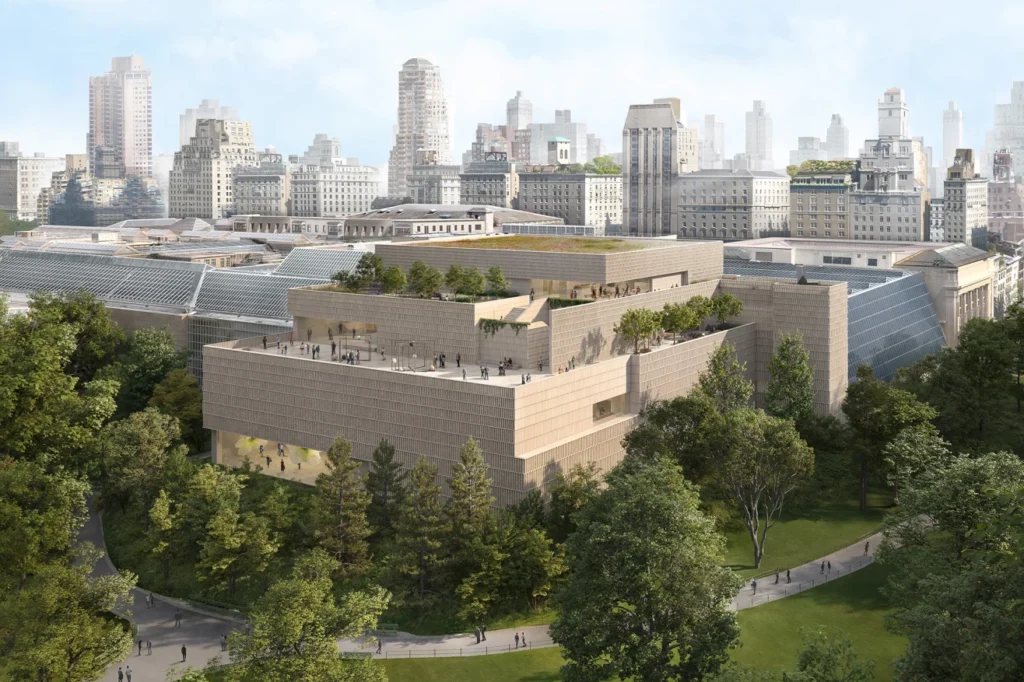
At the Met, Escobedo took the unusual step of fully embedding herself by setting up an office in the museum and working there for a year as she collaborated closely with its staff. In 2030, when the Tang Wing for Modern and Contemporary Art is due to open, the five-floor building with two sweeping terraces and latticed facade, all of which face the greenery of Central Park, will give a sense of atmosphere and reverence to a portion of the museum that, architecturally, has always felt like an afterthought.
For David Breslin, the Met’s curator in charge for modern and contemporary art, Escobedo’s limited experience with large-scale buildings was not an issue. “People ask: ‘What’s it like working with an architect on their biggest project?’ And I say, ‘Well, it would probably be the biggest project for almost any architect that we chose,’” he said. “It just so happens that Frida is younger and earlier in her career than some others. But for whomever, this would have been the job.”
Breslin believes the museum has benefitted from working with an architect who is experimental and open, even without a CV full of similar projects.
“We’re at the crossroads of many different collections,” Escobedo said of the new wing. “There’s this wonderful thing about the fluidity of the Met — you go from one wing to the other without even noticing it.” Visitors might wander from the Arms and Armor section to the American Wing, then find themselves gazing up at the Egyptian Temple of Dendur, letting serendipity guide them.
The Tang Wing, a collaboration with the architecture firm Beyer Blinder Belle, will also house rotating special exhibitions, requiring blank canvases of sorts. But Escobedo is rethinking what it means for a space to be versatile. “It’s common to think about flexibility as a very neutral space that could be reprogrammable, something that is flat and that could allow for different divisions of the space,” she explained. “But the way that we have been thinking is almost the opposite. It’s the architectural specificity that allows for future flexibility.”