


Economy
Calls for humanitarian corridor through strait of Hormuz as Iran war hits vital aid
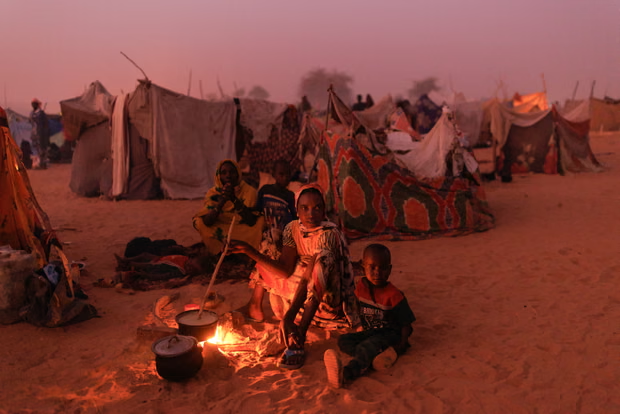
Soaring oil prices and the blockade are preventing food, fuel and medicine being delivered to millions of people in desperate need, say NGOs
The volatility of global oil prices caused by the US and Israel’s war on Iran is taking a toll on the most vulnerable people, by slowing or blocking food and medical aid from reaching them.
Now aid organisations are calling for a “humanitarian corridor” to be opened through the strait of Hormuz amid rocketing transportation costs.
Bob Kitchen, vice president for emergencies at the International Rescue Committee (IRC) called for “serious and immediate conversations about humanitarian corridors through the strait of Hormuz so, at the very least, we can get supplies that are currently stuck in humanitarian hubs through the strait to resupply.”

Vital medicines are not making it out of key hubs. Shipping disruptions prevented the IRC accessing $130,000 (£96,000) of supplies stuck in Dubai that are needed by 20,000 people in Sudan. In Nigeria and Ethiopia, government oil rations meant the emergency relief body was having to limit generator use in its health clinics. “In certain parts of hospitals, we’ll have to close off the electricity to keep more important things running [if this continues],” said Kitchen.
He said aid agencies were burning through budgets rapidly. “It is more expensive to buy fuel to run our operations, moving commodities, moving personnel around many of the countries in sub-Saharan Africa,” he said.
Cecile Terraz, director at the International Federation of Red Cross and Red Crescent Societies, said: “The reality here is that it’s 100% sure that the increase of oil price is affecting the lives of people and also our operations.”
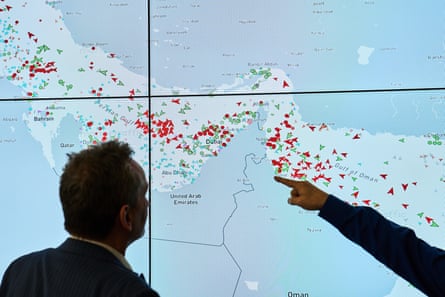
Since the conflict began in February, oil prices have fluctuated, peaking at almost $120 a barrel, up from $60 at the start of the year, as the US and Iran took turns at closing and blockading the strait of Hormuz shipping channel. Limiting the number of cargo ships passing through the 5km-wide passage has had an extraordinary global impact, reducing the global supply of oil, food, fertiliser and medicine, and driven up the price of what is available. The current cost of oil, a primary source of fuel, is nearly $111 a barrel.
Big aid agencies, still reeling from US and European funding cuts, have been badly caught out, because many export humanitarian products including food and medicines from hubs in India and Dubai to communities in need, many of which are in Africa.
Estimates by Save the Children found every $5 increase per barrel of oil cost the charity an additional $340,000 a month in shipping costs, fuel, food and medical supplies over what was budgeted for at the start of the year. That was equivalent to a month of aid for nearly 40,000 children, said the agency’s director of global supply, Willem Zuidema. If oil prices remained at about $100 for the rest of 2026, it would cost the charity an extra $27m this year, he said.
The disruption meant 45 million more people could go hungry, according to the World Food Programme (WFP), in addition to the 318 million people already considered food insecure before February’s attacks.
“We are being squeezed from both ends. While world leaders are cutting aid budgets, conflict is driving up the cost of every shipment, every sachet of food, every medical kit we send,” said Zuidema.
The US cut its foreign assistance by 57% in 2025, while UK aid last year was at its lowest since 2008. Norway, Germany and France have all slashed their aid budgets.
In Yemen, where, after more than a decade of war, nearly half the population is in need of aid, the cost of shipping in goods has risen by up to 20%, because of fuel costs, according to Save the Children’s estimates. Food prices there have risen by 30%.
