


Politics
Brussels backs off from big farm shake-up
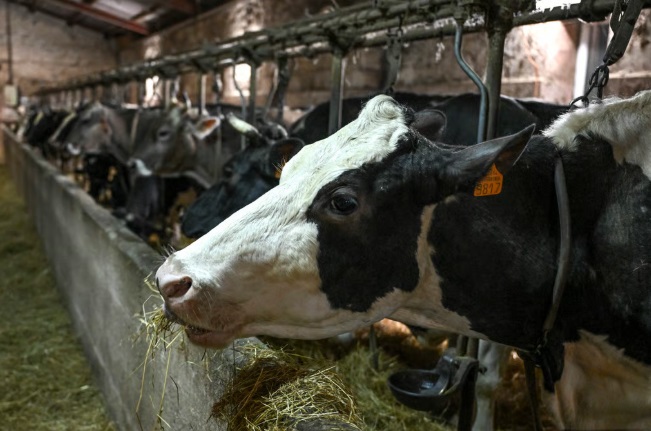
The European Commission tried to gut the EU farm budget. Farmers, ministers and lobbyists fought back and won. But with funds shrinking, the pain is only delayed.
BRUSSELS — Faced with a €30 billion-a-year repayment bill from Covid-era borrowing, the European Commission briefly considered the unthinkable — tapping into the EU’s most sacred cow, farm subsidies.
For a few tense months, Brussels flirted with folding the Common Agricultural Policy and cohesion funds into broader national envelopes, a so-called national partnership plan modeled on the pandemic-era Recovery and Resilience Facility.

Under the proposal, national governments would have more control over how EU money was spent, allowing for faster shifts toward priorities like defense, competitiveness and climate. Officials pitched the system as flexible and streamlined. Critics saw it as a power grab — and a stealth attempt to hollow out the CAP.
Farm lobbyists mobilized. Agriculture ministers revolted. The Commission’s own agriculture chief, Christophe Hansen, began pushing back internally. Germany’s governing Christian Democrats wrote to Commission President Ursula von der Leyen, who hails from the party, urging their “Dear Ursula” not to fold the farm budget into broader spending plans.
“Cuts to the Common Agricultural Policy would send out completely the wrong signal,” Johannes Steiniger, one of the authors of the letter, told POLITICO. “The CAP must continue to have an independent and reliable budget.”
The goal had been to fundamentally reshape how the farm budget worked. But in the end, the next CAP will look much like the current one, with its basic structure left intact.
By June, the Commission had quietly shelved the restructuring plan. Jan Olbrycht, a special adviser to Budget Commissioner Piotr Serafin, said the CAP would remain as a separate pillar in the EU’s 2028-2034 budget. Rural development funding would stay within the CAP’s two-pillar structure. Earlier ideas to shift that money to the cohesion rubric were, Olbrycht said, “over, finished.”
That marked a major retreat before the official unveiling of the Commission’s budget proposal on July 16. And it has underscored the raw political power the farm lobby can still exert in Brussels, even as the number of farmers declines and the EU faces growing calls to redirect money toward strategic challenges.
Structure saved, but cuts still sting
For Europe’s farmers, the victory is bittersweet. With pressure mounting to repay the Covid debt and finance new priorities, Brussels is trying to stretch a budget that is unlikely to grow.
The Commission is still expected to propose significant cuts to overall CAP funding. Early estimates suggest a reduction of between 15 percent and 25 percent compared to current levels. While the structure of the CAP may be safe, the size of the pot is not.
At nearly €400 billion, the CAP currently accounts for almost a third of the EU’s entire seven-year budget. Created in 1962, it is the bloc’s oldest common policy — and is fiercely defended by the vested interests that have benefited from it for so long.
Source: politico.eu
